AFRICAN ARTICLES 1
Reflecting on Queen Elizabeth II’s Death as Africans
MORE BY HANS NGALA



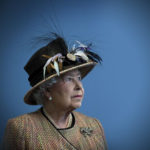
Queen Elizabeth II died on the 8th of September, at her private castle in Balmoral, Scotland, aged 96. Her son, Prince Charles, has now been announced as her successor, choosing the regnal name King Charles III. The death of Queen Elizabeth—the longest serving monarch in modern British history—has shaken the world like few other events have in the last decade. But how should African Christians react to the news?
Tributes from Around the World
Condolences and tributes poured in from Western leaders including US president Joe Biden, who Queen Elizabeth as one who “defined an era” and called her much “more than a monarch”. He said, “Today, the thoughts and prayers of people all across the United States are with the people of the United Kingdom and the Commonwealth in their grief.” U.N. Secretary General, Antonio Guterres, also acknowledged her as the United Kingdom’s “longest-lived” and “longest-reigning Head of State.”
Condolences and tributes poured in from Western leaders.
These tributes were far from unique. Most leaders from around the Western world took the opportunity to pay tribute to Queen Elizabeth.
How Have African Leaders Reacted?
Africans, on the other hand, have expressed mixed sentiments. After all, the Queen’s country colonised swathes of Africa for centuries.
Several African leaders paid tributes to her. For example, Moussa Faki Mahamat, President of the African Union Commission, sent “deepest condolences…to the Royal family and the people of the United Kingdom and the countries of the Commonwealth.”
Africans have expressed mixed sentiments.
Simultaneously, others took a more critical view, highlighting Britain’s colonial actions and its terrible legacy. Though Queen Elizabeth wasn’t personally responsible for colonising Africa, many deem her office responsible for the slavery that enriched the British empire. One such example was Nigerian-born professor at Carnegie Mellon University, Uju Anya. She went as far as saying that she wished the queen an “excruciating death.”
A similar sentiment was expressed by South Africa’s controversial opposition leader, Julius Malema and his Economic Freedom Fighters (the EFF party). He stated that the Queen was “head of an institution built up, sustained and living off a brutal legacy of dehumanisation of millions of people across the world.”
The Queen remains a polarising figure and loyalty to the British crown has recently plummeted, not just in Africa. Barbados removed the Queen as their head of state in November 2021. Her death has brought up discussions about reparations and demands for a formal apology for the slavery that enriched Britain.
How Should We Respond to Queen Elizabeth II’s Death?
Slavery and colonialism are core issues. In many ways they have defined Africa, not only because of their duration but also because of the human toll they exacted on Africa. Though this is the backdrop for many Africans, we must ask what the Christian’s approach should be. Such an approach doesn’t deny what her empire stood for. Yet it is still appropriate to mourn her.
In many ways slavery and colonialism have defined Africa.
Queen Elizabeth wasn’t necessarily a personal “enemy” of the African people. But given the animosity that many still feel towards her, even in death, Jesus’ admonition to applies (). Furthermore, African Christians should remember that we share a common faith with her, a practising Anglican. She herself once said, “For me the teachings of Christ and my own personal accountability before God provide a framework in which I try to lead my life. I, like so many of you, have drawn great comfort in difficult times from Christ’s words and example.”
Whether we see her as an enemy of our continent or a fellow believer, our response as Christians is the same.
Three Responses
1. Never Rejoice over Death
Christians should never rejoice in the face of calamity or death. “Do not rejoice when your enemy falls, And do not let your heart be glad when he stumbles; lest the LORD see it, and it displease him” (). God himself mourns death: “As surely as I live, says the sovereign Lord, I take no pleasure in the death of wicked people. I only want them to turn from their wicked ways so they can live. Turn! Turn from your wickedness, O people of Israel! Why should you die?” (). God’s desire is that no one should perish but all should come to the saving knowledge of Christ.
2. Desire Reconciliation
African Christians must pray for reconciliation. This doesn’t mean pretending colonialism didn’t happen. Nor does it make light of slavery and its devastating legacy in Africa. Across the former British empire, countless people suffered and died. Yet God exhorts us to pursue peace with everyone (). By doing so we express Christian love and imitate Christ. We have the opportunity to be shining lights, in a hate-filled world.
We have the opportunity to be shining lights, in a hate-filled world.
The Truth and Reconciliation Commission chaired by Archbishop Desmond Tutu in South Africa during the 1990s fleshed out a Christian response to the evils of Apartheid. This is an example of how the sins and evils of colonialism and slavery could be dealt with. In the book of Amos, God unpacks the sins of evil empires, exposing them, even those of Israel.
3. Pray for forgiveness
Finally, we should pray that there would be forgiveness and healing in the hearts of former British colonies, where animosity is the most natural feeling. Where it’s very justifiable to hate the crown. In our prayers we must ask God to work both in our hearts and in those people that still suffer the effects of colonialism and slavery. Whether any kind of restitution is offered, Christ calls each of us to forgive Britain for even the most painful parts of its rule.
We Will All Face God’s Judgment
Queen Elizabeth II’s death is a monumental event. It’s also a reminder of our own mortality. For all of us are “destined to die once, and after that to face judgment” (). Regardless of how much status, power, and wealth we possess, it would all mean nothing if we didn’t live for Christ (). Though imperfect, this appears to be how the Queen lived, with a modest faith despite her monarchial might. So who among us is without sin? Who dares pick up the first stone?
The Queen acknowledged a king far greater than she was—or could ever be.
Franklin Graham acknowledged the Queen as “a true friend of the Christian faith.” In spite of her enormous wealth and power, she nevertheless acknowledged a king far greater than she was—or could ever be. He is our king too. What matters in the end is whether our God can say to us, “Well done, good and faithful servant” ().
Where are the African Evangelicals?
MORE BY HANS NGALA
Since the election of Donald Trump in 2016, ‘Evangelicalism’ seems to have taken on a whole new meaning in the United States. Mainstream media often portray evangelicals as Trump-supporting conservatives who, in spite of their profession of faith in Jesus, seem to make dubious decisions that are often at odds with their faith.
But that’s in America. In Africa, a continent of some 500 million Christians, 182 million of them are Evangelicals according to Operation World. Personally, I did not grow up thinking of myself as an Evangelical, though I was actually one. I recall that the exposure I had to the term came from the Christian literature I had access to: the Billy Graham Evangelistic Association’s Decision magazine, Guideposts and Christianity Today. Yet within evangelical Christian circles in my native Cameroon, I never heard the term.
I did not grow up thinking of myself as an Evangelical, though I was actually one
It wasn’t until a few years ago that I looked up a definition of the word and understood it to mean a form of Christianity that emphasises an individual’s relationship with Jesus Christ and the authority of the Bible. This means, Evangelicalism is not a denomination but cuts across denominations. I asked a group of friends in Cameroon what the term meant to them and their responses – as honest as they were – displayed a lack of understanding of what it means to identify as an Evangelical. Their answers included:
- The act of committing oneself to proclaiming the gospel
- To teach or preach the gospel
- The way of a particular religion
Let me give a bit of context here. I am a member of the Cameroon Baptist Convention (CBC) and was raised by a Baptist father and Presbyterian mother, of the Presbyterian Church in Cameroon (PCC). Sunday services rotated between the local Baptist and Presbyterian churches, and I was comfortable in both circles. If anything, I noticed only slight differences in worship styles while both placed a strong emphasis on Scripture. Baptists didn’t (and still do not) baptise infants, unlike Presbyterians – something I didn’t personally agree with. So when I was of age and had to make a decision as to where I wanted to belong fully, I chose to be baptised in the Baptist church, but every now and then, I fellowshipped with the Presbyterians. Some people thought that was a strange thing to do but I was convinced that we had more in common than our differences suggested.
However, when I moved to South Africa earlier last year, I was a little concerned about being unable to find a local Baptist church in my part of Cape Town. I called a friend for advice and he encouraged me not to limit my search to Baptist churches, but to look for a church where Jesus is loved and the Word of God preached boldly, Sunday to Sunday. This helpful counsel eventually led me to Holy Trinity Gardens, an Anglican congregation of the Reformed Evangelical Church in South Africa (REACH-SA). This was my first time ever in an Anglican church but I felt so at home. The Bible was emphasised, and a Christ-centred gospel was preached. I had found a family of believers like me but from a different denomination. We were all Evangelicals!
I learnt then that Evangelicals can be found in Lutheran, Baptist, Presbyterian, Methodist, Anglican and Pentecostal churches. Evangelicalism is not a label. It is a set of affirmations or convictions. In a personal correspondence, Darrell Bock, professor of New Testament at Dallas Theological Seminary in the USA offered this fourfold definition of Evangelicalism, based on four key elements developed by David Babbington:
- Biblicism, a particular regard for and commitment to the Bible (in other words, all essential spiritual truth can be found in its pages)
- Crucicentrism, a focus on the atoning work of Christ on the cross
- Conversionism, the belief that human beings need to be converted, coming to personal faith in the finished work of Christ
- Activism, the belief that the gospel needs to be expressed in effort, obedience to God
Where are the Evangelicals in Africa? Wherever there are men, women, churches and seminaries committed to proclaiming Christ’s finished work of salvation found on the pages of the Old and New Testaments.
While these four commitments above are generally agreed upon by Evangelicals, some disagreements remain. But Africa needs stronger bonds within her Evangelical circles. We must pray for a stronger sense of unity in the body of Christ as his people strive to proclaim his Word on our continent. Let us remember that behind titles and labels lie both consistent and inconsistent doctrine, methods and values. Where are the Evangelicals in Africa? Wherever there are men, women, churches and seminaries committed to proclaiming Christ’s finished work of salvation found on the pages of the Old and New Testaments.
Let Christ, Not Tribe, Determine Who You Marry
MORE BY HANS NGALA
I come from West Africa. It is a part of Africa where – like much of the continent – the concept of “tribe” is quite common. Tribal considerations influence many of life’s major decisions, from voting to church or denomination. Tribe is very often a factor that influences who people choose to marry.
It is not strange to find, for example, that a man in Kenya will want to marry a Kikuyu woman. A in South Africa will likely marry another Xhosa, while an in Nigeria would want to stick with another Igbo. Until death do them part.
What Is my Tribe?
I often hear from older men, “Make sure to marry a fine girl from your tribe.” But the question that I find myself asking soon after is, “Why must I only marry from my tribe?”. Another question might be, “What is my tribe to begin with?”. I have a dual parentage. My father was , one of the ethnic groupings of North-western Cameroon. My mom, on the other hand, was (pronounced “Nso-h”), a neighbouring clan to the Mbum. So, I do not see myself as fully Mbum or Nso, but as both. It gets even more complicated. My name, “Ngala”, is a typical Mbum name but I don’t speak my dad’s language. I only speak my mom’s, because I grew up for the most part in Nso.
Everyone believes they are inherently different from those in other tribes. These divisions were the reason for so many wars in Africa prior to colonisation. They are still the cause of much civil strife on the continent today
But I didn’t quite give much thought to the idea of tribe and how it influences daily life until I was in my late teens. I realised how entrenched and influential the idea is, despite the fact that most people living in sub-Saharan Africa look similar. Despite that fact, from those in other tribes. These divisions were the reason for so many wars in Africa prior to colonisation. They are still the cause of much civil strife on the continent today.
An Identity Found in Shared Values
It is disappointing that people centre their identity around tribes instead of shared common values—even Christians. As Christians, it is paramount to before anything else (see ). This identity in Christ should influence who we marry long before our tribe does.
It is disappointing that people centre their identity around tribes instead of shared common values—even Christians
As a Christian, Who should I Marry?
Doesn’t Song of Solomon recount the story of a mixed-race relationship? There is some consensus that the bride in the poem is a while the bridegroom is an Israelite. She admitted, “I am dark yet lovely, daughters of Jerusalem, dark like the tents of Kedar, like the tent curtains of Solomon” (). Though the book is poetic, we might argue that the bridegroom was at the very least much fairer than his bride (). Yet in spite of their apparent racial or tribal differences they were married. Solomon adored her (). To this example, we could add Boaz and the Moabite Ruth—a marriage in the line of David () and of the Lord Jesus ().
Let me now offer four considerations for African Christians to bear in mind before marriage:
1. Love God Together
Having a spouse who loves God means that you both understand that God is the centre and purpose of life—not to mention your marriage. Without him, it won’t work. This might seem an extreme example but you can find a God-fearing spouse from Croatia, though you may be from Malawi. He might be more suited to you than a man from your village. In , Paul implies that marriage between a Christian and a non-believer is less than ideal. Practically, the challenges of such a situation are obvious. Following after Christ is difficult. A spouse who doesn’t love Jesus will only make that harder.
Following after Christ is difficult. A spouse who doesn’t love Jesus will only make that harder
2. Respect Each Other
Most African parents tend to counsel their children to marry from within their tribe. But this advice might neglect one of the core factors that lead to a successful marriage: respect. In Paul writes, “Let each one of you in particular so love his own wife as himself, and let the wife see that she respects her husband.” Though he is the head of the family (), he is expected to respect his wife and love her sacrificially (). Respect or submissiveness is mutual (). But there is no one ethnic group or tribe that is predisposed to being more respectful than another. If your primary concern is tribe you may overlook character.
3. Share a Common Vision
The Bible says two cannot walk together unless they agree (). This is true of marriage. While tribe tends to be the prime consideration for most Africans before they marry, it is important to ask how your future spouse’s vision for life fits with yours. If you base everything on tribe, your marriage could be headed for disaster before it has even begun. This might be like the unequal yoke that Paul speaks of when he admonishes Christians not be unequally yoked with unbelievers (). It is safe to say that a believer and non-Christian will have very different visions for their lives. For starters, the former understands that all of life is for the glory of God. But even in the case that the prospective husband and wife are both Christians, they may have wildly incompatible.
If your primary concern is tribe you may overlook character
4. Seek the Consent of Both Families
Ultimately, when two young people decide to get married, they must make their intentions known to their respective families. It is important to have the because families can work to undermine a marriage that they do not approve or support. The blessing of parents is desirable (see, for example, ). However, their approval or disapproval should not be the sole or is called off. But because family remains a significant bond in African societies, prospective couples should desire agreement with their decision to marry. This may include which also require wisdom.
In the end, marriage is about reflecting Christ—it was designed by God to present the gospel
A marriage based on a love for God is both a testimony to the world and honouring to God. It is also worth noting that God made partners beautiful or handsome for each other, regardless of race or tribe. In the end, —it was designed by God to present the gospel (). It doesn’t matter where the spouses come from or what they look like, as long as they love God. For those wondering who will make a perfect spouse, it is good to commit this into prayer and ask God to show you. While inviting counsel, we should let God and his directions guide us rather than being ruled by tribe, family and friends.
There’s No Such Thing As Casual Sex
MORE BY HANS NGALA
One of the most important values for any human being aiming to achieve something is self-control. Self-control means restraining our appetites, desires, and even emotions, from anger to jealousy. In fact, self-control is so important that Paul writes, “Every athlete exercises self-control in all things. They do it to receive a perishable wreath, but we an imperishable” (). Self-control could mean reining in our temper and words (), resisting the temptation to cheat financially (), or even controlling oneself from becoming a glutton (). However, this article will examine self-control as it relates to sexual purity and casual sex.
Christians have an even higher calling to control themselves if they want to live right with God. Without holiness, God says, we shall not see him (). And self-control, a fruit of the Spirit, is a crucial form of discipline for a Christian. It takes a lot of introspection and humility to accept that there is something inside of us, our sinful appetites, that need to be addressed and held in check.
Our faith is very much at loggerheads with the world when it comes to sex.
We ought to throw off everything that easily entangles us and identify whatever sin or sins are holding us back so we can run the race marked out for us (). The Christian faith is very much at loggerheads with the world when it comes to the place and importance of sex. The “” in the world says, ‘You can always get married later, but don’t put off having as much sex as possible now’.
In this article, I present four Biblical reasons why we must exercise restraint until we are married.
1. God Empowers Self-Control
The Bible teaches us that it is right to wait on God, exercising restraint of our bodily desires (). For young people, this can especially be difficult when your hormones are surging and the surrounding culture celebrates casual sex. But God calls on us to be pure. “Marriage should be honoured by all, and the marriage bed kept pure, for God will judge the adulterer and all the sexually immoral” ().
Self-control is a key aspect of the Christian life (; ; ; ). It is a “fruit of the Spirit” (). Christians leaders should especially characterise it (; ).
Something inside of us needs to be bridled.
According to The New York Times, Walter Mischel conducted in self-control with young children who were left alone in a room with a bowl of marshmallows with firm instructions not to eat them. They were promised two marshmallows if they didn’t touch the bowl of marshmallows for 15 minutes. Mischel’s experiment, which was conducted over several decades, found that the pre-schoolers who were able to wait 15-minutes went on to get higher grades later in school and even university. They also coped better with stress and had better jobs than their counterparts, who broke the 15-minute rule. This was an epic example of the pay-off of patience and self-control.
God’s call for Christians to be self-controlled presupposes two things:
- There is something inside of us that needs to be bridled or held in check
- In Christ we have the ability to control ourselves.
2. God Exhorts Us to Holiness
The Bible commands us to live a holy life. This does not mean we will not fall short and sin. However, it does mean that our pursuit must be to do God’s work and live for him. In God exhorts us not to “conform to the pattern of this world, but be transformed by the renewing of your mind.” Similarly, John writes “Do not love the world or anything in the world. If anyone loves the world, love for the Father is not in them. For everything in the world—the lust of the flesh, the lust of the eyes, and the pride of life—comes not from the Father but from the world. The world and its desires pass away, but whoever does the will of God lives forever” ().
God calls us to be separate, holy and live for Christ.
So, yes, your friends may be having children out of wedlock and you may wonder if you are missing out. But you should trust God and wait on him for his timing.
We live in a day and age when Christians are regularly being challenged. We walk a tightrope of keeping our jobs and our faith at the same time. Christians are under pressure to wants us to. This is perhaps especially true of . But God calls us to be separate, holy and to live for Christ ().
3. God Expects Us to Steward Our Bodies
Your friends might be living the life now, having fun, getting drunk on the weekends, doing whatever they want. But remember God’s exhortation “to present your bodies as a living sacrifice, holy and acceptable to God, which is your spiritual worship” (; ).
Sex is never casual. It creates lasting bonds.
Tragically, sexual sin is damaging. Casual sex causes both personal and collateral damage. It gives the illusion of pleasure. But this is always short-lived. And it is often followed by unwanted pregnancies, STDs, psychological trauma, and shame. This explains Paul’s language in , “Do you not know that he who unites himself with a prostitute is one with her in body? For it is said, ‘The two will become one flesh.’” Sex is never casual. It creates lasting bonds. This is why Paul simultaneously admits his preference for singleness but says courting Christians ought to marry if they burn with passion. ().
4. Don’t Confuse Sex with Love
Never mistake sex with love, least of all casual sex. That is not how true love works. “Love is patient and kind; love does not envy or boast; it is not arrogant or rude. Love does not insist on its own way; it is not irritable or resentful; it does not rejoice at wrongdoing, but rejoices with the truth. Love bears all things, believes all things, hopes all things, endures all things. Love never ends” ().
Never feel bad for believing and standing by what God says.
Never feel bad for believing and standing by what God says, even if it offends the person you’re in a relationship with. If they truly love you, they will respect your body and your wishes.
Do Africa’s Self-Styled Prophets Fear COVID-19?
COVID-19 continues to deal unprecedented blows to our collective human existence, revealing our fragility. Even religion is not exempt from its complications. For the effects of the pandemic on religious activities have been monumental. Some of these effects have also revealed some surprises. One such surprise has been the activities of self-proclaimed ‘prophets’ in Africa. They have never been so quiet.
A Deafening Silence
Previously these so-called prophets offered predictions and solutions for every challenge. They predicted election outcomes, sporting events and visa applications. They even conducted spiritual ultrasounds for pregnant women. Most Africans have heard them brag about their abilities to exorcise any demon, cast out every disease and solve whatever problem. Despite most predictions going unfulfilled, they have excelled at gaining the admiration of gullible followers. Many of those followers are now wondering where their prophet went. For the prophets are quiet.
Many are now wondering where their prophet went. For the prophets are quiet
What is responsible for this sudden, unexpected silence from their quarters? Surely these mighty vessels of God’s power are not being bullied by a diminutive disease. Should we conclude that these prophets can no longer reach or access the sovereign God? Or has God ceased speaking to his “servants”? Where are the almighty anointing oils and spiritual amulets? Perhaps the answer to these questions is simple: the prophets also fear COVID-19.
The image of the Christian church in Africa has suffered a significant and sustained battering in the public space because of . Their bold announcements have been the cause of much embarrassment for the global church. Therefore I believe the Lord is . He is humbling these self-styled prophets. So here are two lessons in this season on the life and activities of the so-called prophets in Africa.
1. Prophets Are Still Human
This sounds harsh. But it is true. Africans esteem their religious leaders. In a large part this is due to their perceived roles as mediators between God and humans. Religious leaders are also viewed as custodians of certain spiritual knowledge and mysteries. They possess learning beyond the reach of ordinary people. Thus their intervention in virtually every sphere of human life is deemed indispensable. For what will we as Africans ever do without the intervention of ? But this esteem means that undue authority is vested in religious leaders. They dominate African societies, assuming an almost unquestionable position and power.
Religious leaders dominate African societies, assuming an almost unquestionable position and power
Now the Bible does teach that leaders generally, and religious leaders specifically, deserve to be honoured (see ; ; ; ). But before servants of God are honoured, they must be a defender of the truth and their lives must be compatible with the Gospel of Christ (). Religious leaders who abuse their followers have no biblical basis for doing so. We need only read Jeremiah’s scathing rebuke of Israel’s greedy leaders and prophets (; also ). They treated their office as an opportunity for self rather than service. God is not pleased by such attitudes.
Humans are Accountable to God
As a matter of fact, the shepherd metaphor used to describe in the Bible implies the opposite. Those who lead the sheep should do so at expense to their personal safety and comfort; not the other way around (). It is the role of the pastor to protect the flock from enemies or predators. But we are all familiar with reports of Christian leaders abusing those they were assigned to protect. Ignorant and gullible are the abusive, opportunistic leader’s preferred sheep.
Those who lead the sheep should do so at expense to their personal safety and comfort; not the other way around
Let me put a straightforward question to you: are religious leaders God? No, they are mere humans. Therefore while it is good to respect the office of the pastor, it is equally important to . They are not God. Nor do they possess His power or authority. They have limitations and are prone to error. This is the human condition. But this is a truth that Africans consider too infrequently. Religious leaders are called and are given specific tasks to undertake for God (; ). Therefore, their primary goal is to glorify God through their lives, mission and ministry. They should not seek vainglory from the people they have been called to serve.
Christian Leaders Exist to Glorify God
Barnabas and Paul exemplify this pursuit when God used them to heal a congenital cripple in Lystra (). Surprised by the miracle, the crowds shouted, “The gods have come down to us in human form!” (). But Barnabas and Paul did not bask in the glory due to God alone. Instead they replied, “Men, why are you doing this? We too are only men, humans like you” (). This is one truth that many self-styled prophets in Africa refuse to admit. But could their sudden silence during the pandemic be an admittance? For it has , just like you and me.
2. God is Not at the Mercy of Humans
Who would ever have thought that something other than another world war could ? We have read about plagues and diseases in history. But no one thought that this would happen in our lifetime, or the age of modern medicine. Thus the world was caught unawares. All the educational, scientific, medical, political and economic attainments of the global powers have not yet rescued the world from the virus’ grip. Humanity has been humbled.
Similarly to the world, self-styled prophets make grandiose claims regarding their power. But the Bible is full of examples showing that God is never at the mercy of humans. .
Prophets are ultimately only ever beneficiaries of God’s grace. Therefore they should not be elevated
2.1 Prophecy is a Gift of God, Therefore He Deserves All the Glory
There are two thing to consider in the Bible concerning prophets and prophecy. First, prophecy is not manmade. It is a gift from God. Therefore God, who grants the gift, is greater than the gift as well as the benefactor. Essentially, it is God who deserves the praise. For He grants every gift. In other words, prophets are ultimately only ever beneficiaries of God’s grace. Therefore, they should not be elevated – whether in their own hearts or those of others (see ). So, prophets are expected to use God’s gift courteously, soberly, and with the sense of accountability. This is no different from any other gift.
2.2 Prophets Know Nothing Apart from God
Our second lesson is gleaned from the comment of Elisha regarding the Shunammite woman – when she went to Elisha on Mount Carmel in bitter distress at the plight of her son (). Elisha said, “But the Lord had hidden it from me and has not told me why” (). Elisha, a student of the renowned Elijah, was likely a prophet of international status. Yet God could still act without informing him.
This position is corroborated by Moses when he says “the secret things belong to the Lord our God, but the things he revealed belong to us” (). This shows our limitedness as humans and the sovereignty of God. No prophet, no matter how powerfully endowed, can fully comprehend the mind of God. Nor does God reveal everything to his human agents. This calls for faithfulness and humility when claiming to speak for God.
God is Greater than Man
The surprising quietness of many prophets regarding COVID-19 casts aspersions on their unbridled and often presumptuous predictions. It also raises serious questions over their supposed power. The truth is: God is greater than man and his mind cannot be fathomed by humans. Christians should always bear in mind that God is never at the mercy of his creation. Rather we, his creatures, are subject to him. We are benefactors of grace. The servants of God, Christian leaders and so-called prophets are not an exception to this truth.
Witchcraft, Spiritual Powers & New Life in Christ Jesus
MORE BY INOCÊNCIO VARINE


Some say witchcraft is an African magic, an African spirit, or demonic powers present on our continent. But Paul speaks of it as satanic powers that are dominant in the present world. Look at , “We do not wrestle against flesh and blood, but against the rulers, against the authorities, against the cosmic powers over this present darkness, against the spiritual forces of evil in the heavenly places.”
We must consider what God says about the world we live in and the powers of darkness at work in it.
In the light of the transforming power of the gospel, we must consider God’s self revelation, as well as what he says about the world we live in and the powers of darkness at work in it. A better understanding of this cosmic struggle of satanic influence known as “witchcraft” is an important consideration for all who call themselves Christian and live throughout Africa.
What is Witchcraft?
Witchcraft is a common practice in many cultures across the world, but especially common in Africa. It is a broad term of beliefs and has hierarchical levels. Possession of satanic or and the practice of magic are all types of witchcraft. Overall, it’s the belief that some people have spiritual powers and are able to control and influence others—positively or negatively.
Witchcraft is the belief that some people have spiritual powers and are able to control and influence others.
Witchcraft involves a service provider who provides medicine namely a traditional healer (witch-doctor, also called Sangoma), or a diviner (someone with the ability to do divination); a person assisting the witch doctor (the agent or helper); and then a person in need of assistance (the patient). Senior witches with high supernatural powers are called “kings” or “queens” and they give the agents tasks to perform like assisting the needy (if they are meant to do good) or to negatively manipulate (causing damage and disaster). The latter may be considered as evil spirits or demons.
Witches and Sorcerers
Further definitions on this subject describe witchcraft as a feminine noun, ‘employment of the witches’, while the substance obtained from or through a witch is a masculine noun, which is something done by an art of magic or witchcraft. However, there is often a differentiation between witches and sorcerers due to the fact that their spiritual powers come from inside and not through instruments or objects. It implies that witches can curse someone without using a stick, while a sorcerer must use an instrument or object.
However, there is no witch doctor who is not a witch – all witch doctors have an altar or a source from where they receive their spiritual powers. Furthermore Witchcraft can be understood as a demonic power – similar to spirit-possession, a “condition in which one or more evil spirits or demons inhabit the body of a human being and can take control of their victim at will.”
Instead of promoting harmony and peace, witchcraft spreads terror, superstition, division, envy, and confusion.
In some cases, those who are possessed by spirits are considered as helping their communities by giving spiritual direction (divination), or by providing medicine. But there are those who use witchcraft with evil intention: destruction, subjection, and death. The fact remains that instead of promoting harmony and peace, witchcraft spreads terror, superstition, division, envy, and confusion.
Is Witchcraft Ever ‘Good’?
When we look at the social impact of witchcraft, we see that it is not a belief system working in isolation, but rather a working system affecting a wider, integrated and shared belief system.
For some, witchcraft is a source of misfortune, disease and death while for others it is a source of life and protection. This is because there are also “good” witch doctors. They are able, through magic, to manipulate a situation for someone’s benefit. Consequently, it can cause others to envy that person’s success. They may try to block this good fortune through witchcraft, which would cause the prospering person to seek protection from a “good” witch doctor.
Many Africans, when in need of protection or resources, will trust a witch doctor.
Most witch doctors have an animist mentality. This means that they believe everything in life happens a a result of invisible forces – be that success or failure; an accident or disease. Sometimes it goes to the extent of physical and psychological diseases, even death, forcing victims to seek help from a witch doctor. While a handful of , the majority will, instead of providing a vital solution, lead a person into ‘bondage’ by taking total control of their life.
So many Africans, when in need of protection or resources, will trust a witch doctor instead of living an honest and rational life or working hard to achieve success.
Witchcraft in Mozambique
Witchcraft is a common practice in Mozambique. Although many people do not speak of their involvement openly because they fear how they will be perceived by others. There is a wide range of interpretation regarding what witchcraft involves in Mozambique. Yet there two primary words used.
Although common practice, many people do not speak of their involvement in witchcraft.
Firstly, “curanderismo”. This refers to the process of receiving healing through a spiritual intervention provided by a witch doctor. Whenever a medical doctor cannot cure a sickness people will run to a witch doctor. They believe that someone is witching the patient and that’s why the doctor can’t heal them. Secondly, “fetiçaria”. This is the spiritual action perpetuated by bad spirits. A person with a bad spirit is called “feticeiro”. It implies therefore that “witchcraft” has both a physical and a spiritual side.
The “curandeiro/witch doctor” is seen as a person who does good; they provide medicine or cure the sick. But still, they use witchcraft, causing spiritual and emotional manipulation, which leads to depression, misfortune, poverty and sickness.
Where do Sangomas Come From?
Some individuals recognise qualities in a certain witch doctor and ask them to train them. They then become a witch doctor in their own right. A person can also be instructed through a dream to go for a training. There are even cases where certain spirits call a person to take over the work of a predecessor.
The time of training differs from person to person. It could range from a couple of days to a couple of months. The person will usually come home healthy (from physical point of view). But from a spiritual point of view, they’ll be filled with evil spirits. When their training is done, the person comes back with the skills and materials to perform the work of a witch doctor.
Passing on a Witching Spirit
Some people are born with a witching spirit, others are consecrated at an early age. But most of the time a family member who has a witching spirit passes it on – training a child or a close relative to replace them.
A witching spirit is sometimes passed on in a deceitful way. The person looking for help will approach a Sangoma or witch doctor for help. The witch doctor will lie to the person, passing on the witching spirit to the patient. In this way he will then control and manipulate them for personal gain or spiritual interest. So the patient becomes the witch doctor’s victim.
It is important to mention that jealousy often motivates a witching spirit. Witchcraft, sorcery or superstition are all satanic influences and therefore outside of God’s will for humankind. The impact of witchcraft is immense in our society today, both in the cities and smaller villages. Technological advancements and globalisation have now reached many rural areas. But it does not stop people from committing their lives to witchcraft.
What Form Does Bewitching Take?
As mentioned, witchcraft works through various satanic or demonic activities. Firstly, there is demon oppression. This can cause someone to experience negative physical or emotional symptoms. For example, feeling ill or sad and troubled. Not all oppressions are results of demonic influence. Yet there are certain sicknesses which seem to manifest as a result of witchcraft.
Secondly, there is demon obsession. Here mind binding spirits, mind bleeding spirits and mind confusion spirits fill the mind of the victim with fear or false ideas. They experience unpleasant scenes and mental pictures so that they become continually depressed. Self-accusation and self-condemnation are some characteristics of the obsessed person.
Thirdly, demon subjection. This is a form of control that a malevolent spirit brings to an individual through the power of darkness. It is so severe that the victim loses all control and the evil spirit assumes total control. This subjection manifests itself as a form of slavery to anything that can destroy a life. It could include things like drugs, sexual impurity, violent temper, uncontrolled thoughts, resistance to divine things, religious disillusion, self-pity and many others.
Lastly, there is demon possession. This is a condition by which one or more evil spirits or demons inhabit the body of a human being. These can then take control of the victim at will.
Does Witchcraft Affect Everyone?
Witchcraft is not limited to specific cultures or religions. It does not only affect poor, indigenous or uneducated people. The rich, owners of big companies, politicians or even churchgoers and pastors are also victims. It can affect all those who have not fully put their faith in Jesus Christ. Indeed any who, when their circumstances are out of their control, will turn to witchcraft.
When there is no true trust in the living God, people will turn to witchcraft or other demonic spirits.
The truth is, when there is no true trust in the living God, people will turn to witchcraft or other demonic spirits that deny the lordship of Christ.
What Does the Gospel Say About Witchcraft?
The issue of witchcraft must be tackled with the understanding that the great commission directs us to so that they grasp the new life we have in Christ Jesus. Often, our poor understanding of the work of the Holy Spirit hinders us to grasp how evil spirits work. So as Christians, we should from the Holy Spirit to clearly understand the manifestation of evil spirits ().
Our first step in dealing with witchcraft is to in their lives. Everyone who receives Jesus in their heart becomes a child of God (). For Jesus alone has the power to set people free (). No matter how deeply someone might be involved in witchcraft, confessing Jesus as Lord and Saviour is the key to true salvation (). says, “Therefore, if anyone is in Christ he is a new creation. The old is gone and the new has come.” This implies that to be in Christ is a turning point.
Often, our poor understanding of the Holy Spirit’s work hinders grasping how evil spirits work.
In conclusion, Paul sets up an approach to Christian ministry when he says the following: “We demolish arguments and every pretension that sets itself up against the knowledge of God, and we take captive every thought to make it obedient to Christ” ().
Comments
Post a Comment